REPORTS
These reports demonstrate the analytical standard applied in every client engagement. The same methodology used to analyze geopolitical risk applies to the business decisions you face.

Visibly Invisible: How Privacy Theater Creates a Detectable Outline
BLUF (Executive Summary)
Privacy fails when a person confuses concealment with control. VPNs, privacy phones, encrypted apps, limited social media, and compartmented communication can reduce exposure when the user applies them for a defined purpose. They create a different risk when the user builds an identity around being hard to verify. That behavior creates a visible outline. Employers, clients, investigators, border officers, lenders, business partners, and counterparties do not need full access to a person’s life to assess risk. They only need enough inconsistency, abnormality, or missing context to pause. The practical remedy does not require public oversharing or surrendering personal privacy. It requires controlled visibility. A person should maintain a credible public-facing identity, use privacy tools for defined defensive purposes, and avoid turning concealment into the main thing others notice.
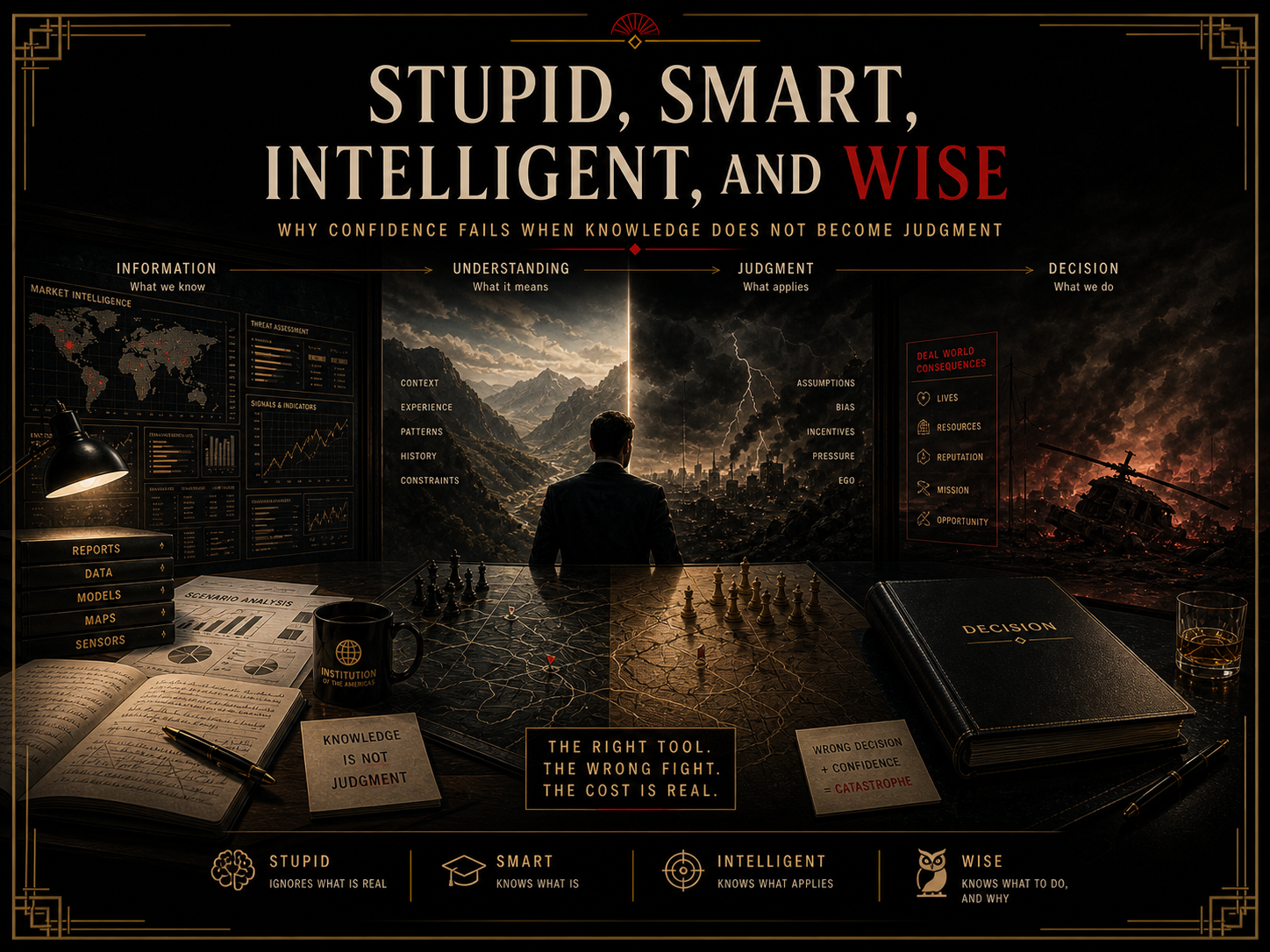
Stupid, Smart, Intelligent, and Wise: The Cost of Knowledge That Has Never Been Tested
BLUF (Executive Summary)
Competence does not move in a straight line from knowledge to good decisions. A person can know facts, use technical language, manage tools, and still fail when the situation requires judgment. The difference between being stupid, arrogant, evil, smart, intelligent, and wise matters because organizations often promote the appearance of competence before they test decision quality under pressure. Smart people can accumulate and repeat information. Intelligent people can determine when information applies. Wise people combine knowledge, context, experience, humility, and consequence awareness before they act. The failure point appears when leaders confuse technical confidence with practical judgment. In that condition, reports, maps, trackers, briefings, and data streams become performance artifacts rather than decision tools. The remedy is not more information. The remedy is disciplined judgment: identify the scenario, test the assumption, listen to competent staff, and choose action that fits the operating environment rather than the leader’s preferred mental model.
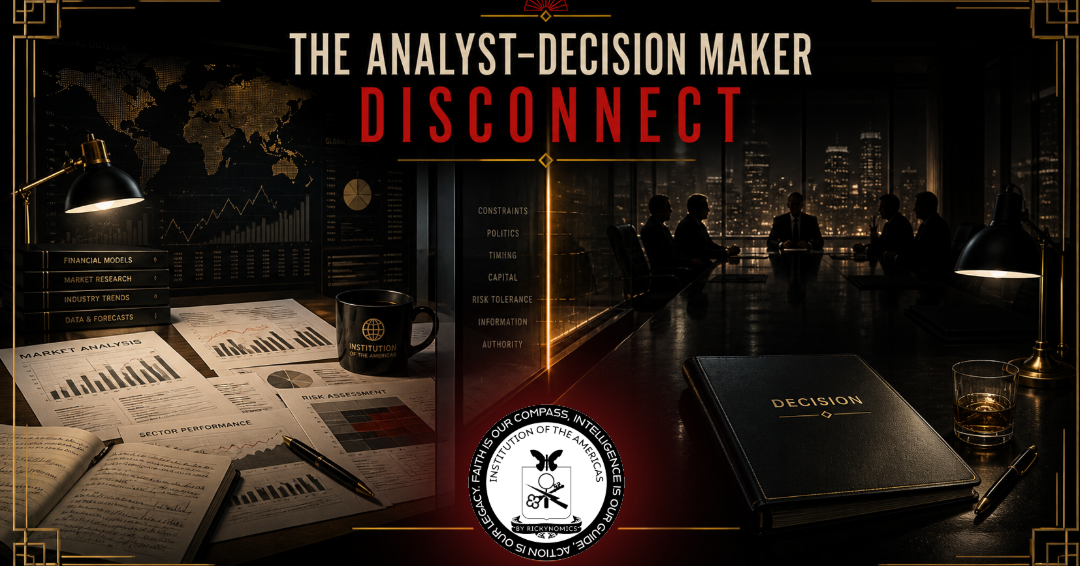
The Analyst and Decision-Maker Disconnect
The analyst and decision-maker disconnect begins when institutions ask analysts to assess reality while decision-makers operate inside constraints that remain unstated. The analyst usually optimizes for accuracy, defensibility, sourcing, and methodological integrity. The decision-maker must manage timing, mandate limits, committee pressure, client expectations, career risk, and exposure to loss. When these two functions do not share the same constraint set, analysis can be correct and still fail to shape action.

Dating Apps and Productivity Tools: The Same Profit Loop in Different Clothing
Dating apps and productivity tools converge on the same subscription profit loop: sustain discomfort, then sell relief (tiers, boosts, quotas). Dating monetizes loneliness and uncertainty; productivity monetizes overwhelm and control loss. The defense is procurement discipline—build method on primitives, keep substitutes, pay only for a named constraint.
Navigating Dual Economic Paths: Venezuela's BRICS Membership and Dollarization
Dual strategies to bypass the dollar and stabilize inflation risk deepening structural instability and accelerating economic decline.

The Threats and Considerations in a Conflict with Mexican Cartels: Parts I,II,and III
Cartels have evolved into global hybrid enterprises, embedding in legal systems and exploiting institutions to expand influence and instability.
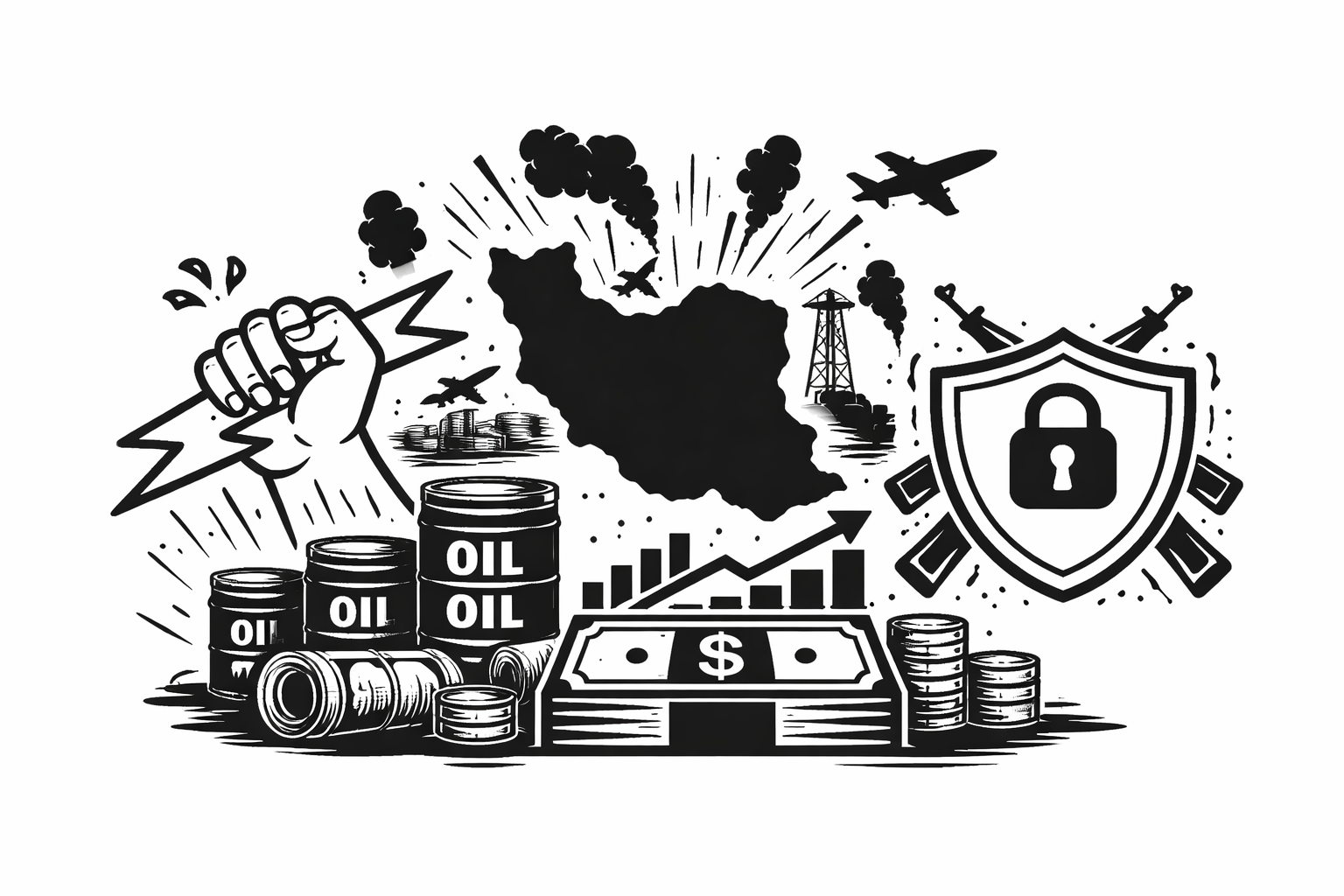
Iran at War: The $100-Oil Crisis Reshaping Global Markets
The U.S.-Israel military campaign against Iran has closed the Strait of Hormuz for 20 consecutive days, removing 20% of global oil supply from circulation and pushing Brent crude above $113/barrel. Iran has proposed yuan-only tanker passage through the strait, directly challenging dollar-denominated energy pricing. This report covers the sanctions architecture, the energy market shock, and the regional spillover across three analytical domains with specific implications for corporate decision-makers, investors, and intelligence analysts.
Venezuela After Operation Absolute Resolve
BLUF (Bottom Line Up Front):
Across security, society, the economy, energy, and external engagement, Venezuela entered a transition defined by continuity under constraint rather than collapse or consolidation. The removal of senior leadership disrupted coordination without dismantling capacity. Institutions continue to function at reduced effectiveness, households and firms operate defensively, and external actors maintain leverage through ambiguity. The dominant condition is suspension. The outcome over the next phase will depend on whether consistent enforcement, legal clarity, and governance sequencing emerge before informal systems and localized power arrangements harden.

Questions From Decision-Makers
Tariff-based secondary sanctions are unlikely to become automatic tools of U.S. foreign policy, but they are increasingly used as situational instruments to force accelerated negotiations and reshape economic behavior. Recent cases indicate a shift away from consensus-driven diplomacy toward leverage-based trade pressure, including against allies. This approach prioritizes resource access, supply chain control, and market dominance, with downstream implications for institutions, markets, and households.
Cuba Without a Patron: Regime Survival in a Post-Venezuela Environment Post Operation Absolute Resolve Resource and Regime Sustainment Assessment
BLUF (Bottom Line Up Front):
After Operation Absolute Resolve, Cuba lost most direct support from Venezuela. Venezuela stopped sending oil and related resources in December 2025. That loss affects fuel, electricity, financing, barter programs, and security cooperation. Mexico now sends limited fuel to Cuba, and Russia and China provide small and indirect support. No country has replaced Venezuela as a full sponsor. Cuba now manages constant shortages and relies on short-term fixes to keep the government functioning.